Contents:
- Understanding Fine Hair vs. Thin Hair vs. Low-Density Hair
- How to Make Fine Hair Look Thicker Through Cut Strategy
- The Power of Layered Cuts
- Shorter Length Strategy
- Textured vs. Straight Cuts
- Colour and Highlights for Thickness Illusion
- Highlights and Lowlights Technique
- All-Over Lighter Shades
- Product Selection: The Real Game-Changer
- Volumising Shampoos and Conditioners
- Dry Shampoo and Texturising Sprays
- Volumising Mousses and Foams
- Blow-Drying Technique for Maximum Thickness
- The Inverted Head Technique
- Sectioning and Root Lift
- Cool Shot Finishing
- Regional Considerations for Fine Hair in the UK
- Quick Cost Breakdown: Making Fine Hair Look Thicker
- Comparison: Styling for Thickness vs. Hair Extensions
- Styling Methods for Daily Thickness
- Braids and Updos
- Curling and Waving
- FAQ: Making Fine Hair Look Thicker
- How quickly can I make fine hair look thicker?
- Does fine hair look thicker when shorter?
- Can diet improve fine hair thickness?
- Is fine hair more prone to breakage?
- What’s the best hairstyle for fine hair?
- Start with One Change This Week
Most people assume fine hair thickness is fixed—either you’re born with thick hair or you’re not. That’s the myth holding you back. Hair that appears thin can look dramatically thicker through technique, product choice, and styling strategy. You don’t need extensions, expensive treatments, or genetic luck. The difference between “thin” and “thick-looking” hair comes down to approach.
Understanding Fine Hair vs. Thin Hair vs. Low-Density Hair
Before learning how to make fine hair look thicker, distinguishing between these commonly confused categories matters. Fine hair refers to individual strand thickness—the diameter of each hair is small. You might have 100,000 strands of fine hair, creating a full head quantity-wise. Thin hair describes overall hair volume across your entire head, regardless of strand thickness. Thick-strand hair that’s sparse looks thinner overall. Low-density hair means fewer follicles on your scalp, typically around 80,000-100,000 instead of the average 120,000-150,000.
The good news: styling techniques work identically across all three conditions. Creating thicker appearance depends on controlling light reflection, creating texture and separation, and choosing cuts that amplify perceived volume rather than compress it.
How to Make Fine Hair Look Thicker Through Cut Strategy
The Power of Layered Cuts
A single strategic change—switching from blunt to layered—can add 30-50% apparent thickness. Blunt cuts sit flat against the scalp, emphasising thinness. Layers create space between hair sections, allowing light to penetrate and making hair appear fuller and more textured.
The best cuts for fine hair feature choppy, graduated layers throughout—particularly at the crown where you need height most. Ask your stylist for layers that start at ear level and continue throughout, creating movement rather than weight. Prices for quality layered cuts range £35-70 at UK salons. A good stylist with fine hair experience will work at £50-70 but delivers results lasting 8-12 weeks.
Avoid these cut mistakes: one-length cuts, heavy fringes (which weigh down), and “grown out” phases between cuts. Fine hair shows damage and split ends more visibly than thick hair, so trims every 6-8 weeks maintain appearance.
Shorter Length Strategy
Hair length matters profoundly. Long fine hair looks thinner because gravity stretches it flat. Shorter hair (chin-length or above) appears thicker because the weight-to-volume ratio improves. Length between shoulder and ear length (approximately 30-38cm) represents the sweet spot for most fine hair—long enough for styling options yet short enough to appear full.
Women with fine hair often report a 20-40% visual thickness increase when cutting from bra-length to shoulder-length. Men experience similar effects with slightly shorter overall length.
Textured vs. Straight Cuts
Textured cuts create separation between individual strands, making thin hair appear fuller. Straight cuts lay flat and emphasise individual strand fineness. Ask your stylist for “textured layers” or a “shag” cut rather than sleek, blunt lines. The slight raggedness is intentional—it’s what creates visual thickness.
Colour and Highlights for Thickness Illusion
Strategic colouring creates optical illusions of thickness. Lighter colours (whether highlights, balayage, or all-over) reflect more light, making hair appear fuller. Darker colours absorb light, emphasising thinness by comparison.
Highlights and Lowlights Technique
Face-framing highlights (8-12 placement) create depth and dimension, making thin hair look more textured. Balayage (hand-painted highlights) costs £60-120 at UK salons and lasts 8-12 weeks before roots show significantly. The lighter sections catch light, creating visual fullness that a single-tone colour doesn’t achieve.
Pairing highlights with subtle lowlights (darker sections) amplifies the effect. The contrast between light and dark creates the illusion of texture and dimension, effectively adding “visual layers” that don’t require cutting.
All-Over Lighter Shades
If you prefer single-tone colouring, lighter shades (ash blonde, honey tones, light brown) create more apparent thickness than darker shades. Comparing identical thin hair in dark brown versus light blonde, the blonde appears approximately 25-35% thicker simply due to light reflection. Cost for all-over colour ranges £35-80 depending on length and complexity.
Product Selection: The Real Game-Changer
Volumising Shampoos and Conditioners
Standard moisturising shampoos designed for dry hair add weight, flattening fine hair further. Volumising shampoos contain lightweight polymers and proteins that coat hair minimally whilst adding structure. Look for formulas with “keratin,” “amino acids,” or “thickening polymers”—avoid those listing silicones in the first five ingredients.
Quality volumising shampoos cost £3-8 per bottle and last 3-4 weeks with regular use. Brands like Lee Stafford, Charles Worthington, and Pantene Gold Series deliver salon-quality results at supermarket prices. Professional-grade options from Tigi or Olaplex (£12-18) last longer due to concentration.
Conditioner strategy matters equally. Use lightweight conditioners (or skip conditioning entirely on roots) and apply only to mid-lengths and ends. Many people with fine hair discover they don’t need conditioner once they stop using silicone-heavy products that create the appearance of dryness.
Dry Shampoo and Texturising Sprays
Dry shampoo transforms fine hair within seconds. It absorbs scalp oils (which weigh hair down) whilst adding grip and texture to individual strands. Brands like Batiste (£2-3 per can) are affordable and effective. Apply to roots before blow-drying for maximum effect—the heat activates the product.
Texturising sprays (£6-12 per bottle) create separation between individual hairs, making thin hair appear thicker through fragmentation. Spray onto damp hair before blow-drying. Sea salt sprays work particularly well on fine hair because they don’t require much product to create visible texture.
Volumising Mousses and Foams
Applied to damp roots before blow-drying, volumising mousse (£5-10 per container) creates lasting lift. The mousse sets as hair dries, maintaining volume throughout the day. This works better than heavier styling products like gels or pomades, which compress fine hair.
Blow-Drying Technique for Maximum Thickness
Technique matters more than product. Improper blow-drying negates every volumising product choice.
The Inverted Head Technique
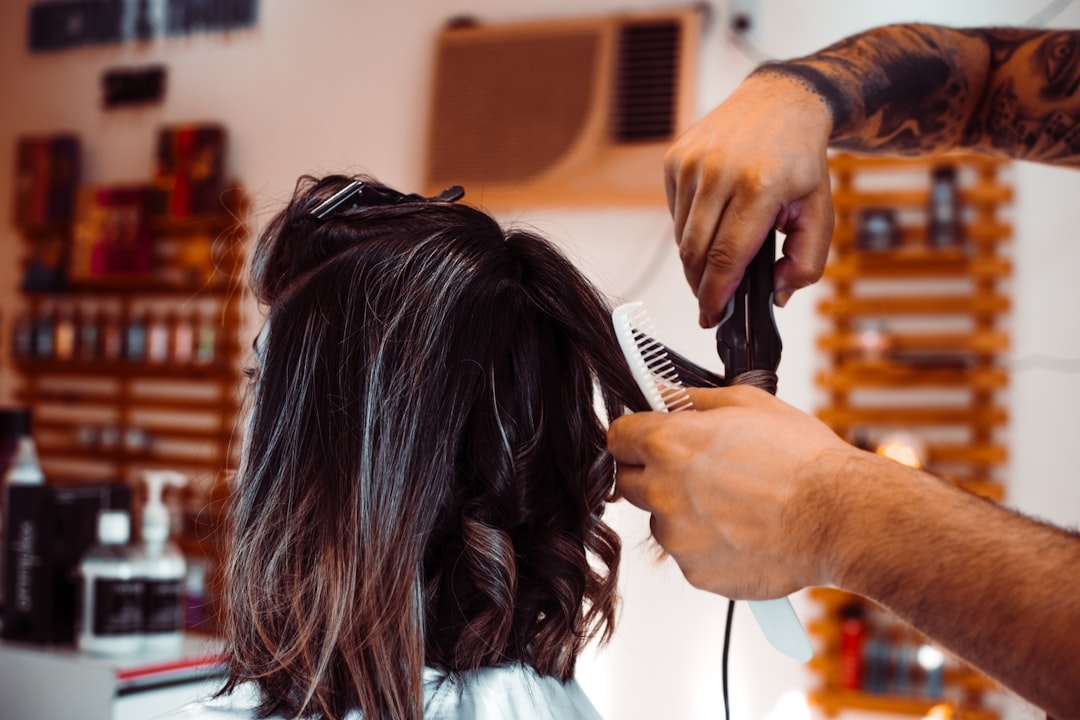
Flip your head upside down and blow-dry your hair hanging toward the floor. This gravity-assisted method lifts roots away from the scalp naturally. Dry 80% of your hair in this position, then flip back up to style the final 20%. This technique adds approximately 30-40% apparent volume and works for all hair types.
Sectioning and Root Lift
Section hair into 4-6 clips, then unclip and dry one section at a time. Focus heat and airflow specifically on roots, where volume matters most. Direct your airflow upward and away from the scalp—never flat against the scalp. Use medium heat (not high, which damages fine hair more easily) and a concentrator nozzle for directed airflow.
Cool Shot Finishing
A 30-second cool shot at the end seals the hair cuticle in your styled position, locking in volume. This also increases shine by approximately 15%, making hair look healthier and fuller. Cool air is particularly important for fine hair because it prevents the limp flatness that residual heat creates.
Regional Considerations for Fine Hair in the UK
Geographic location affects how you manage fine hair. Northern regions (Scotland, Northern England) experience higher humidity (65-75% regularly), making straight styles lose volume faster. Coastal areas along the South West and East Anglia deal with salt-laden air, which dries fine hair excessively but paradoxically creates texture. Dry inland areas (parts of the Midlands) present the easiest environment for maintaining straight styles and perceived thickness.
In humid regions, anti-frizz serums and humidity-resistant products become essential investments. Coastal areas benefit from sea salt sprays (which enhance natural texture) and moisture-rich conditioners applied sparingly. Dry areas can rely more on texturising products without worrying about excessive moisture expansion.
Quick Cost Breakdown: Making Fine Hair Look Thicker
- Professional haircut (layered): £40-70, every 8-12 weeks = approximately £3-6 monthly
- Volumising shampoo and conditioner: £6-16 total, lasting 4 weeks = £1.50-4 weekly
- Dry shampoo: £2-3 per can, lasting 3-4 weeks = £0.50-1 weekly
- Volumising mousse: £5-10 per container, lasting 6-8 weeks = £1-1.50 weekly
- Colour or highlights (optional): £35-120, every 8-12 weeks = £3-10 monthly
- Ionic hairdryer (one-time): £40-150
Total monthly cost: £10-35 for products and cuts combined. Initial investment (if purchasing a new hairdryer) adds £40-150 but spreads across years. This is dramatically cheaper than extensions (£200-500 upfront, £50-100 monthly maintenance) or advanced treatments (£60-150 per session).
Comparison: Styling for Thickness vs. Hair Extensions
Many people assume extensions are the only solution for thin-looking hair. Extensions cost £200-600 for quality application, require £50-100 monthly maintenance appointments, and can damage natural hair if applied too tightly. They’re also noticeable when you change styles or shower, limiting versatility.
Strategic styling, conversely, costs £10-35 monthly, requires no maintenance appointments, and is entirely reversible. You can change styles daily without damage. Extensions suit people wanting dramatic length changes quickly. Styling techniques suit people wanting to improve their existing hair’s appearance indefinitely.
Styling Methods for Daily Thickness
Braids and Updos
Loose braids and soft waves created through braiding create texture that makes thin hair appear fuller. Sleep in loose braids and release them in the morning for instant waves without heat damage. This method costs nothing and works particularly well on days 2-3 after washing when hair has absorbed natural oils.
Curling and Waving
Soft waves created with a curling iron (temperature: 150-170°C for fine hair) make individual strands visible, creating the illusion of thickness. Larger waves appear fuller than tight curls. A curling iron costs £30-100 and creates waves lasting 6-12 hours depending on hair texture and humidity.
FAQ: Making Fine Hair Look Thicker
How quickly can I make fine hair look thicker?
Immediately, with proper styling technique and products. A layered cut creates visible thickness within one day. Blow-drying technique changes show results immediately. Colour takes one salon appointment (typically 2-3 hours) to apply. Long-term improvements (from conditioning and regular cuts) compound over 4-8 weeks.
Does fine hair look thicker when shorter?
Yes. Hair shorter than shoulder length (approximately 35cm or less) appears visibly thicker due to weight distribution. Longer fine hair stretches flat under its own weight, emphasising thinness. The ideal length for fine hair ranges from ear-length to shoulder-length (20-38cm).
Can diet improve fine hair thickness?
Nutritional deficiencies can worsen hair appearance. Adequate protein, iron, zinc, and B vitamins support hair health. However, diet changes take 3-4 months (one hair growth cycle) to show visual results. Styling improvements deliver faster results for immediate appearance changes.
Is fine hair more prone to breakage?
Fine hair breaks more easily because individual strands are thinner and more fragile. Excessive heat, chemical treatments, and tight styles compound breakage. Limiting heat to 3-4 times weekly and protecting hair with heat-protectant products reduces breakage significantly.
What’s the best hairstyle for fine hair?
Layered cuts, shorter lengths (ear to shoulder), and textured styles all suit fine hair. Straight, blunt, one-length, or long styles emphasise thinness. Waves, curls, and separation between individual strands create fuller appearance. Your ideal style combines layering, shorter length, and textured finish.
Start with One Change This Week
Making fine hair look thicker doesn’t require overhauling your entire routine. Start with your next haircut—ask specifically for choppy layers and shorter length if you’re not already working with those. Within a week, switch to volumising shampoo. Within two weeks, master the inverted blow-dry technique. Each small change compounds, creating cumulative thickness improvement. By week four, you’ll likely see 30-50% apparent thickness increase without a single expensive treatment or commitment.